Why mobile audio matters
Mobile devices have changed how people consume information. Many users now read articles, watch short videos, listen to lessons, and browse product pages from their phones. In this environment, text to speech can add a practical audio layer to mobile content. Instead of relying only on on-screen text, websites and apps can let users listen while commuting, exercising, cooking, or multitasking. This makes content more flexible and easier to access in different situations. For brands, mobile-friendly audio can also increase the time users spend with content because listening often feels easier than reading long blocks of text on a small screen. A well-planned text to speech strategy for mobile use is not only about convenience. It also supports accessibility, improves content reach, and helps users engage with information in the format that suits them best.
Text to speech for mobile content works best when the listening experience is designed specifically for mobile behavior. Phone users often interact in short sessions, switch between apps, and use audio in noisy environments. Because of this, long and dense scripts may not perform well unless they are broken into clear sections. Short introductions, direct language, and well-structured content make mobile listening smoother. It is also important to think about playback speed, pause placement, and sentence length. These details help AI voices sound clearer on mobile speakers and earbuds. Content creators who understand mobile listening habits can turn existing written material into useful spoken content without rewriting everything from scratch. The goal is to match spoken delivery with the way people actually use their devices throughout the day.
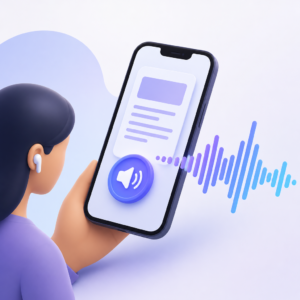
How to adapt content for smaller screens and shorter attention spans
Creating mobile-friendly text to speech starts with writing for clarity. On mobile, users may begin listening in the middle of a task, so the message should be easy to follow from the first sentence. Short paragraphs, simple transitions, and direct word choice help listeners stay oriented. Lists, steps, and key points should be introduced clearly so they are easy to understand without seeing the screen. It also helps to remove unnecessary filler, long introductions, and complex phrasing. Spoken mobile content should move forward quickly while still sounding natural. If the original text was written for desktop reading, it may need light editing before conversion. Even small changes, such as replacing abbreviations, simplifying numbers, or clarifying technical terms, can make a major difference in speech output quality and listener comprehension.
Another important part of mobile optimization is content length. A ten-minute audio segment may work for some formats, but many mobile users prefer shorter pieces they can start and stop easily. Breaking long content into smaller sections allows listeners to return later without losing context. This approach is useful for tutorials, product information, help articles, and educational material. Titles and section labels also matter because they guide users through the experience. When listeners can quickly choose the part they need, the content feels more useful and less demanding. For businesses, this can improve completion rates and user satisfaction. Shorter segments are also easier to test with different voices and settings, which makes it simpler to refine the final result before publishing audio across mobile platforms.
Where text to speech fits in mobile experiences
There are many practical ways to use text to speech in mobile content. News summaries, blog posts, product descriptions, tutorials, in-app instructions, and support articles can all benefit from audio playback. In mobile commerce, spoken product information can help users review details while browsing or comparing options. In educational apps, learners can listen to lessons while looking at examples on screen. In service-based apps, text to speech can guide users through steps without requiring constant visual attention. This can be especially useful when users are walking, traveling, or handling another task. Mobile content does not need to become fully audio-based to gain value from TTS. Even a simple listen option on key pages can improve usability and create a more flexible content experience for a wider audience.
Text to speech can also support stronger retention in mobile environments. People often remember information better when they can both read and hear it, especially when the structure is clear and the voice is easy to follow. For mobile publishers and businesses, this creates opportunities to repurpose written content into an audio format with minimal extra production time. A single article can become a listenable version for busy users. A set of FAQs can become spoken help content inside an app. Updates, alerts, and educational tips can be delivered in a consistent voice across different mobile touchpoints. When used carefully, TTS helps build continuity between written and spoken communication. This consistency matters because it creates a smoother user experience and can strengthen trust in the content or brand.
What to consider before publishing mobile TTS audio
Before publishing text to speech for mobile content, it is important to review the technical and user experience details. Audio should load quickly, controls should be simple, and playback should work well on different devices and connection speeds. Mobile users expect fast interactions, so complicated audio players can reduce engagement. It is also helpful to offer clear play, pause, restart, and speed options. If content includes names, numbers, dates, or special terms, these should be checked carefully to avoid confusing pronunciation. Testing on both speakers and headphones can reveal issues that may not be obvious in a desktop setup. Since many users listen in public or busy places, clear pacing and clean output are especially important. Strong mobile TTS experiences come from small decisions that reduce friction and make listening feel natural.
As mobile usage continues to grow, text to speech can become a valuable part of a broader content strategy. It helps websites and apps meet users where they are, whether they want to read, listen, or switch between both. For teams working with AI voices, the opportunity is not only to convert text into sound, but to shape content that fits real mobile habits. This means shorter sections, clearer language, useful navigation, and reliable playback. Businesses that approach mobile TTS in this way can make their content more accessible, more practical, and more engaging without changing their core message. In a competitive digital space, small improvements in usability can have a strong impact. Adding well-designed text to speech to mobile content is one of those improvements that can deliver value across many types of users and content formats.