Interactive voice response systems, often called IVR, are a common part of customer service. They answer calls, guide people through menu options, share basic information, and help route callers to the right department. Text to speech can improve IVR systems by making them easier to update, easier to scale, and more consistent across different call flows. Instead of recording every prompt by hand, teams can turn written scripts into clear spoken messages in less time. This is especially useful when business hours change, promotions start, or support options need quick updates. For companies that manage large call volumes, AI voices can support a faster content process while keeping spoken communication organized and professional.
Why text to speech works well in phone menus
Traditional IVR production often depends on voice recording sessions, editing, and file management. That process can work, but it may become slow when prompts need frequent revisions. Text to speech offers a more flexible approach. Teams can edit wording directly, regenerate audio, and deploy updates without restarting the full recording workflow. This helps maintain accurate menus and reduces the chance that callers hear outdated information. It also supports consistency because the same voice, tone, and pronunciation rules can be used across many prompts. In multilingual environments, text to speech can also help businesses create phone experiences in more than one language without needing separate voice talent for every update. A well-planned TTS IVR setup can improve clarity for callers while giving internal teams more control over content management.
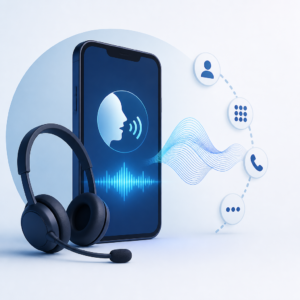
How to design better IVR prompts with AI voices
Good IVR audio starts with good writing. Phone menu prompts should be short, direct, and easy to follow on first listen. Long sentences, complex wording, and too many choices at once can confuse callers. When using text to speech for IVR, it helps to write in a conversational but precise style. For example, prompts should clearly tell callers what action to take and when to take it. Important options should appear early, and similar options should be grouped logically. It is also useful to test how numbers, dates, product names, and abbreviations are spoken by the selected AI voice. Some terms may need formatting changes to sound more natural. Pauses matter as well. Well-placed punctuation can improve timing and make menu navigation easier to understand. The goal is not only natural speech, but also a smooth caller experience.
Key use cases for text to speech in IVR
Text to speech can support many parts of a phone system beyond the main menu. Businesses can use it for after-hours messages, queue updates, appointment reminders, temporary service alerts, payment notifications, order status information, and routing instructions. It is also useful for seasonal campaigns or short-term announcements that do not justify a full recording project. In larger organizations, different departments may need separate prompts while still maintaining a unified voice style. TTS makes that easier to manage. It can also help organizations test new call flows quickly before committing to long-term changes. When paired with careful script review and quality checks, AI-generated voice prompts can create a reliable and scalable solution for customer communication over the phone.
To get the best results from text to speech in IVR systems, businesses should focus on clarity, consistency, and regular testing. The selected voice should match the brand and remain easy to understand on phone lines, where audio conditions are more limited than in video or podcast formats. Prompts should be reviewed often to remove outdated references and simplify instructions. It is also important to listen to generated audio in the real call environment, not only on desktop speakers. This helps identify issues with pacing, pronunciation, or volume. By combining strong script writing with practical testing, text to speech can make IVR systems more efficient for teams and less frustrating for callers. For organizations looking to modernize phone support, AI voice technology offers a practical way to keep spoken information accurate, responsive, and easier to manage.